2022-06-27 · Industry reprint
Elsa smart coolers invite you onto the first train of the channel-operations metaverse
Using cloud computing, IoT, artificial intelligence and other new technologies to reinvent operating models has long been consensus. New technology keeps accelerating the digital transformation of retail, helping the industry find breakthroughs in efficiency and customer experience. In smart retail, scenario-based AI delivers not only single-point digital breakthroughs but also organisational change across the whole industry.
In the post-pandemic era, the global economy has taken a heavy hit; many industries face sluggish or even negative growth. Breaking past the limits of a stock economy and building a new moat is the new task facing every large FMCG company. New technologies — IoT, AI and the metaverse — open limitless imagination and possibility. Innovative technology will bring a technical upgrade to retail: one inventory across online and offline, the physical and digital working in sync — and, like every technological shift in history, a wholly new organisational change.
As early as 2020 the global retail industry had reached US$27 trillion in scale, and leading forecasts put AI's share of additional growth above 36% by 2035. Smart retail in China is in rapid development: over 2017–2019 the sector's compound annual growth rate reached 115%, projected to reach US$240 billion by the end of this year — extraordinarily strong momentum.
To turn this potential into reality, technology-heavy companies and their ecosystems are joining the transformation. "Project Dragon" (乘龙计划), launched by Microsoft in China, aims to build the blueprint of future new retail on intelligent cloud, IoT and AI. Mightytech, a Microsoft Gold ISV partner, was among the first to join, bringing the terminal intelligence solution that matters most for offline channel digitisation — covering stores, coolers, air-curtain cabinets and shelves, every retail space that faces the consumer. By analysing and presenting terminal-execution data (display, sell-through, inventory) in real time, it feeds accurate, real-time, high-volume data into channel digitisation.
From traditional to smart: retail's change is not only about headcount
Offline retail is the physical form of people, goods and place. How precisely and in real time offline data can be captured — especially the return flow of "goods" and "place" data — and how much value terminal assets (shelves, stores, coolers) yield when turned from cold terminals into living data, is critical.
Before this, traditional channel management relied on large numbers of field staff. Inspecting terminals meant relationship maintenance, facing checks, competitor analysis — each store's data recorded and rolled up to head office. This human-dependent model leaves traditional retail with data fraud and insufficient coverage:
• Terminal data collection is delayed, subjective and unclear
• Processes lack automated management (high labour cost)
• No dynamic decision capability on real-time data (slow decisions)
• No intelligent fine-grained management (thousands of stores, supply chain, industry-chain division of labour)
These pain points show how heavily offline channel digitisation depended on manpower — a "sea of people" approach. Without effective insight tools, brand owners and merchants still receive delayed, biased data that produces no real value. Under the new technology model, these processes run on smart terminals and large-scale data analysis. Major players are already turning assets that depreciate every day into high ground that captures images of goods and place automatically and analyses them in real time.
Since its founding, Mightytech has focused on integrated FMCG and retail AIoT solutions. With industry-leading recognition accuracy and vertical delivery capability, it serves many well-known beverage and dairy brands. In 2017 its first-generation SnapGo smart shelf inspection product launched, earning selection into the Microsoft accelerator as one of the earliest to bring scenario-based AI to China. In 2019 it developed its own edge-computing module and iterated rapidly on smart coolers, becoming the leader in ice cream cooler intelligence. Today, on a massive FMCG packaged-SKU library and leading model accuracy, it can put a model live within one week at accuracy above 96%.
When terminals gain "intelligence", three parties win. Brand owners free their field reps from repetitive visit-and-count work, leaving time for market development and customer relations. Camera-captured images analysed in real time yield dynamic sales, new-product performance and cooler ROI, pushing management insight down to the final terminal for fast response to the market. Distributors get better placement analysis, better product mix per cooler and out-of-stock alerts that speed inventory turns and lift revenue per unit. Chain stores get better display guidance and replenishment reminders, raising per-store sales and profit.
Stores that already own ordinary terminals only need to attach the camera and edge-computing module to any model — instantly smart. The module currently fits more than 90% of terminal models on the market.
When coolers gain "intelligence", sales decisions get sharper
The first step of terminal digitisation is image recognition accuracy — especially for soft packaging with high visual similarity, such as ice cream in its many shapes (cones, pouches, boxes). According to Mightytech founder Wang Nana, three years of massive data in this segment and leading algorithms deliver accuracy above 96%, 10–20 percentage points ahead of competitors — the most widely deployed commercial solution today.
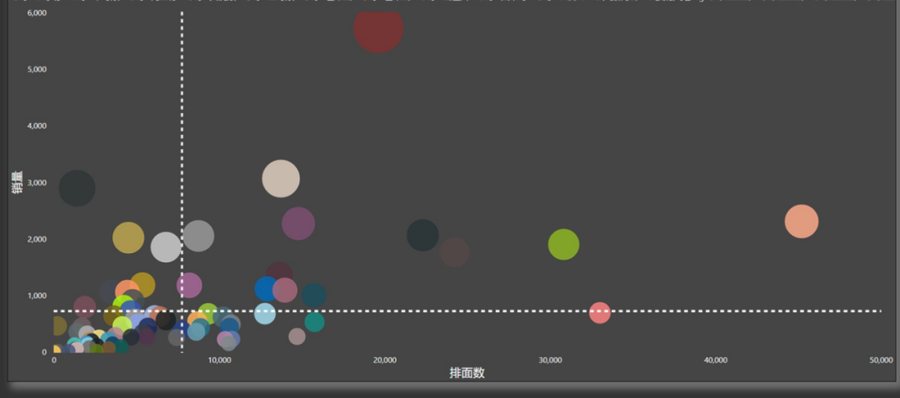
The second step is sell-through data analysis that lifts terminal ROI. Ice cream is highly seasonal; capturing in-season sell-through data and adjusting distribution routes and marketing strategy in real time cuts cost and raises output — built on accurate, real-time data return from a massive terminal fleet.
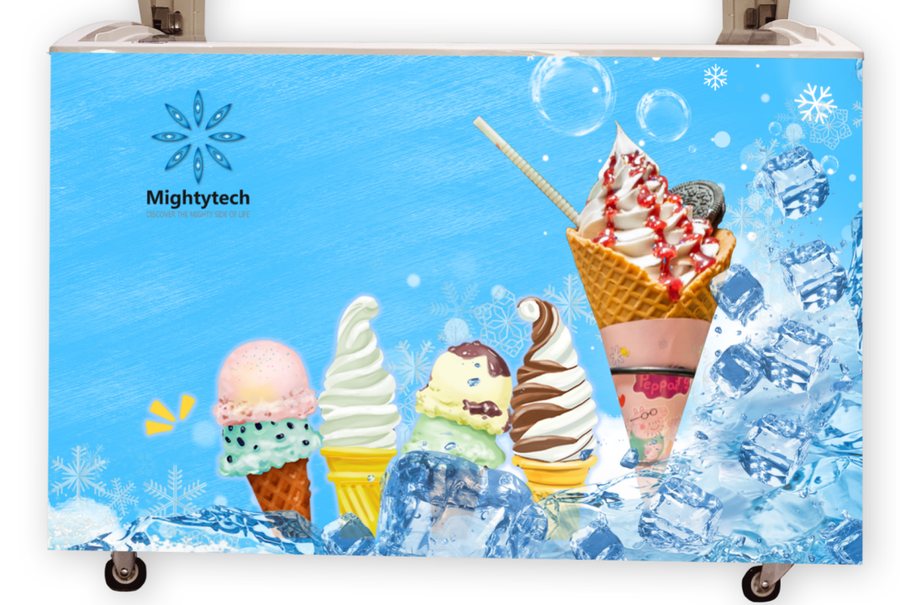
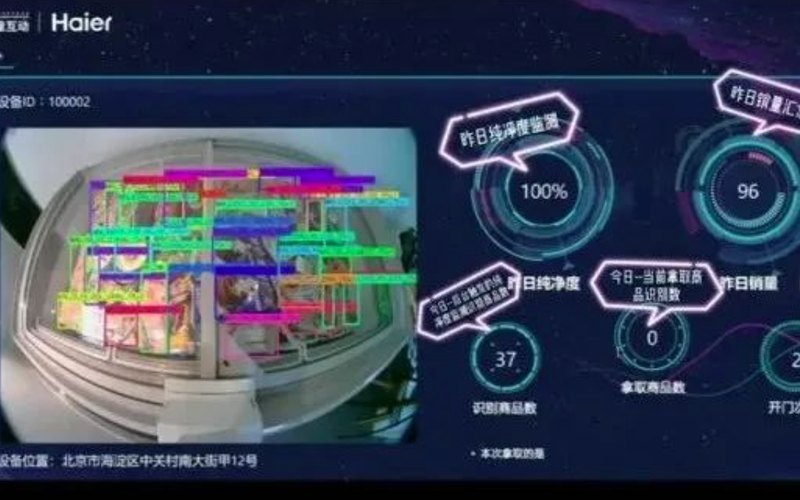
The Elsa smart terminal turns a "dumb cooler" into a "data engine" at the press of a button: a vision device inside the cooler photographs it every time a customer opens the door, analysing SKU facings, ice cream take rates, door-opening counts and more. From the most basic display data, footfall and dynamic sell-through, it quantifies and grades every terminal, optimising the choice of "place" — putting terminals where the business actually is.
Analysing a full cycle of data powers sell-through digitisation. Analytics and visualisation are not the end result; precise, reliable decision support is. Combined with the customer's placement strategy, it optimises each terminal's distribution model and each SKU's route — the intelligence of "goods": the right SKU in the right cooler, goods and place working together.
Take a well-known FMCG company Mightytech serves: single-cooler footfall conversion rose from 19% in 2019 to 26% in 2021, reaching 51% in 2022. Driven by the flow of goods and place, single-cooler ROI rose more than 28%. The future of retail is inevitably one inventory online and off — a new form in which AI, IoT and big-data analytics fuse tightly with the physical world.
Together with Microsoft, building solutions to a high standard
Mightytech has worked closely with Microsoft since its founding. It is an alumnus of the 12th Microsoft accelerator cohort and a Microsoft Gold ISV partner.
A key reason for choosing Microsoft: China's smart retail space suffers from uneven standards in areas like industry norms, data security and reliability. Through the partnership, Mightytech aims to build secure, reliable, high-standard industry solutions — removing customers' concerns about the safety of their digital assets.
Having joined Microsoft's "Project Dragon" early, Mightytech will cooperate with Microsoft on multiple levels.
In joint technology, Mightytech's overall IT architecture is certified and endorsed by Microsoft, guaranteeing high-standard service, reliability when terminal devices connect at scale, and the security of customers' digital assets. The IoT edge-computing module is Microsoft-certified, and natively integrated databases make it easy to extend services on cloud-native product lines such as Power BI and Power Apps.
In joint market and customer work, Microsoft aims to connect closely with different industries beyond its own ecosystem, and Mightytech — a Microsoft-certified ISV partner — can work with Microsoft to land industry-scenario solutions, a win for both sides.
Going forward, as IoT and digital-twin technologies keep developing, Microsoft's "Project Dragon" will take deeper root in China, co-creating and delivering solutions with customers across more fields and driving qualitative change across industries.